 SWRainAlert
The blog
Stormwater compliance, explained properly.
What rainfall actually triggers an inspection where you build, how NOAA’s radar products are made and where they fail, and what a record needs to carry to survive an audit. Written for inspectors, superintendents and compliance managers — not for search engines.
Latest · Enforcement
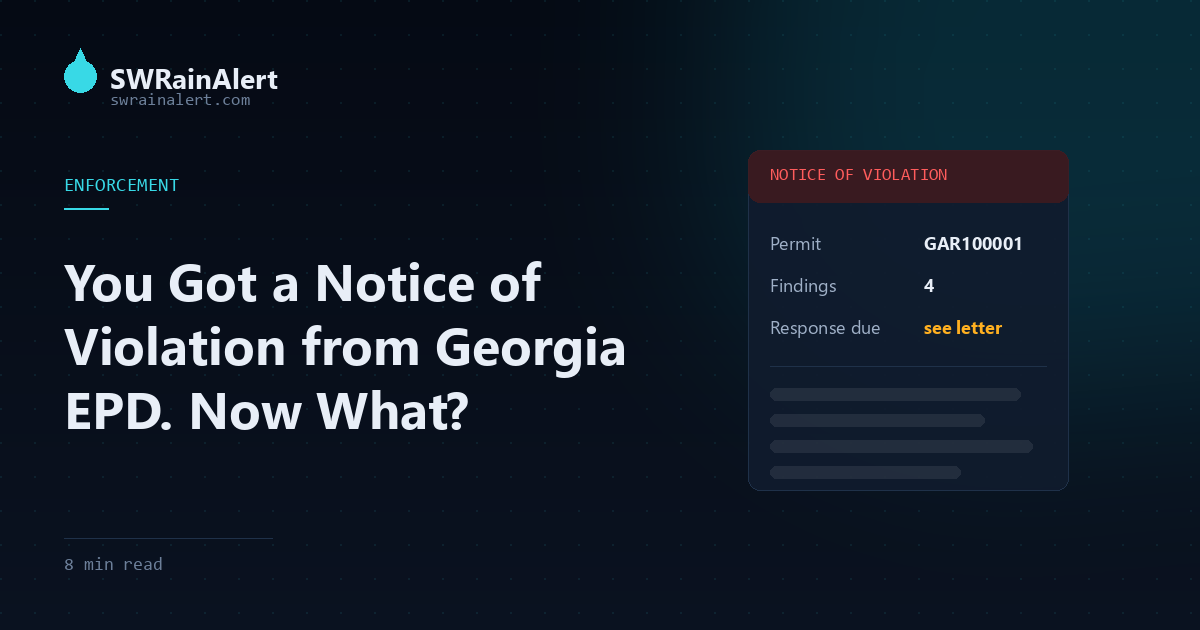
You Got a Notice of Violation from Georgia EPD. Now What?
The letter is not the penalty. It is a request for your version of events — and on a construction site, your version of events is almost entirely the rainfall record and the inspections that followed it.
Enforcement
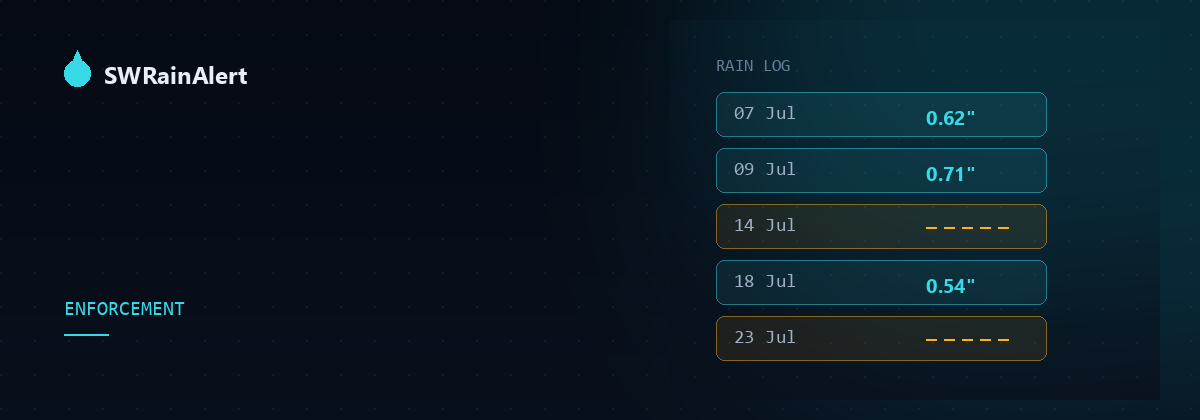
You Got a Stormwater Violation Notice in South Carolina. Now What?
South Carolina does not work like Georgia, and a response written on Georgia assumptions will answer the wrong question. Here the weekly inspection is the obligation, and rainfall is a recordkeeping duty attached to it.
Enforcement
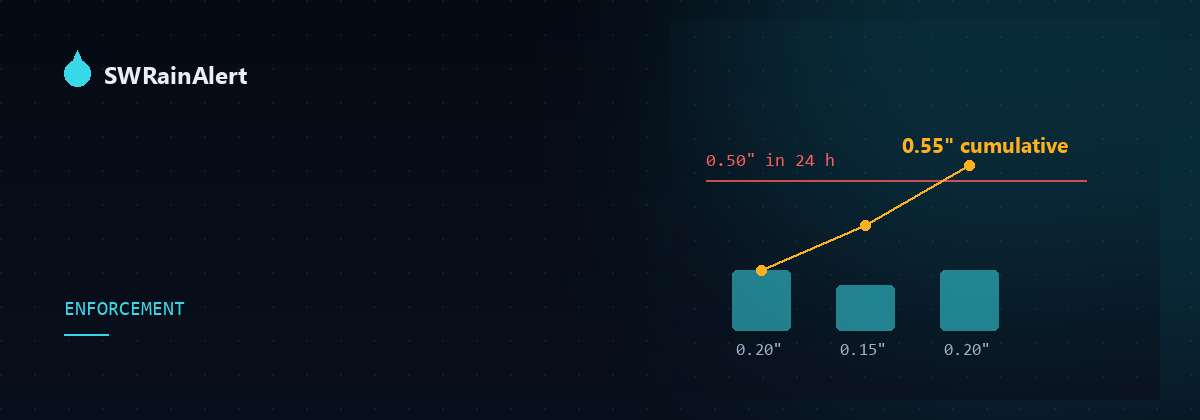
You Got a Notice of Violation from TCEQ. Now What?
Texas has the clearest rainfall rule of any state we track, and the one most likely to be logged wrong — because TXR150000 counts the drizzle that nobody recorded as a storm.
Permit thresholds
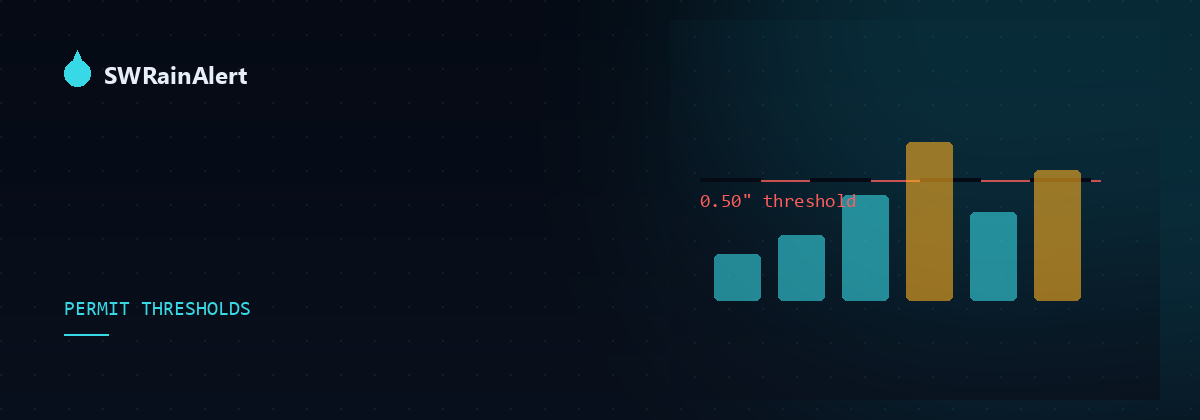
The 0.25″ Federal Rain Trigger Is Probably Not Your Number
Most rainfall triggers quoted in this industry are quoting somebody else's permit. Here is how to find yours, and why the number changes when the permit is reissued.
Measurement
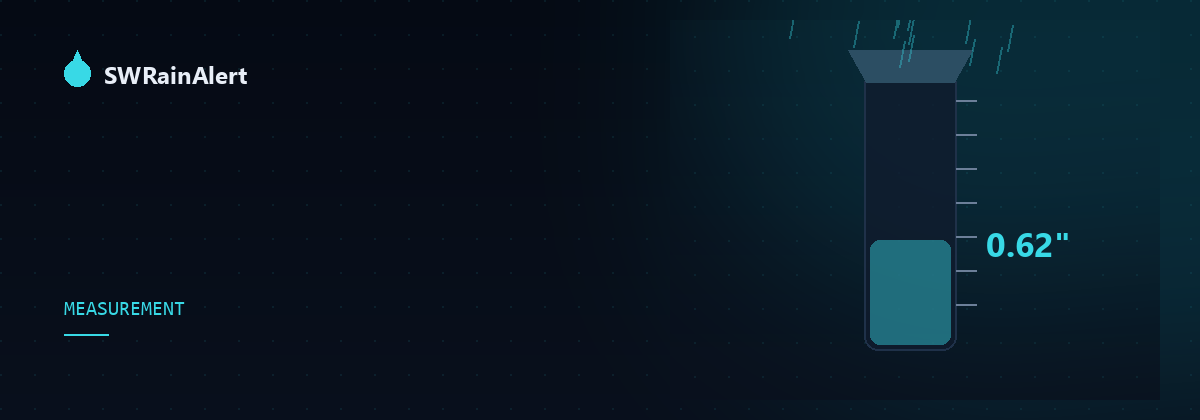
Rain Gauge or Radar? How to Measure Rainfall for Compliance
A gauge measures one point exactly, if someone reads it. Radar measures an area approximately, always. Those failure modes are opposites, which is the argument for using both.
How measurement works
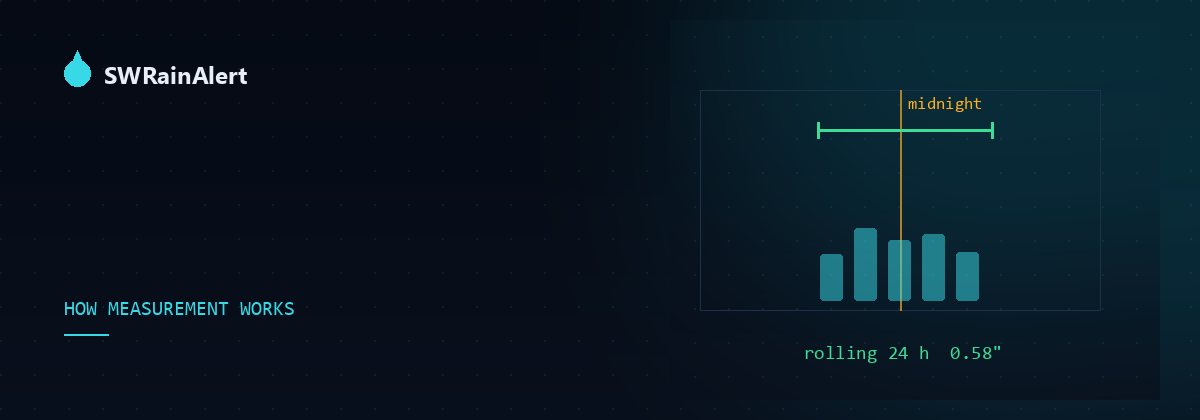
Rolling 24 Hours vs Calendar Day: The Storm Your Log Missed
A storm that runs from 22:00 to 02:00 is one event. Measured against calendar days it becomes two totals, neither of which crosses the threshold.
Enforcement
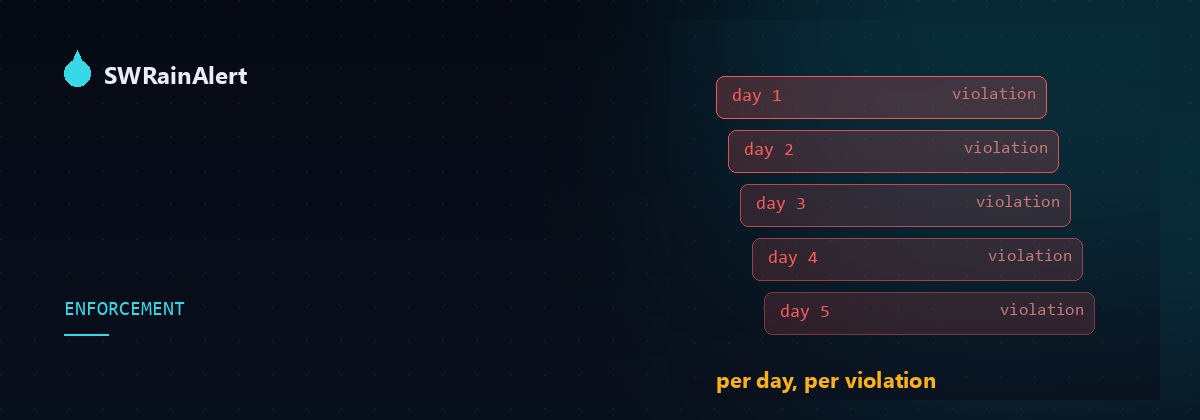
What a Stormwater Violation Actually Costs
Penalties are assessed per day and per violation, which means the expensive part is rarely the discharge itself. It is the weeks of missing records behind it.
Documentation
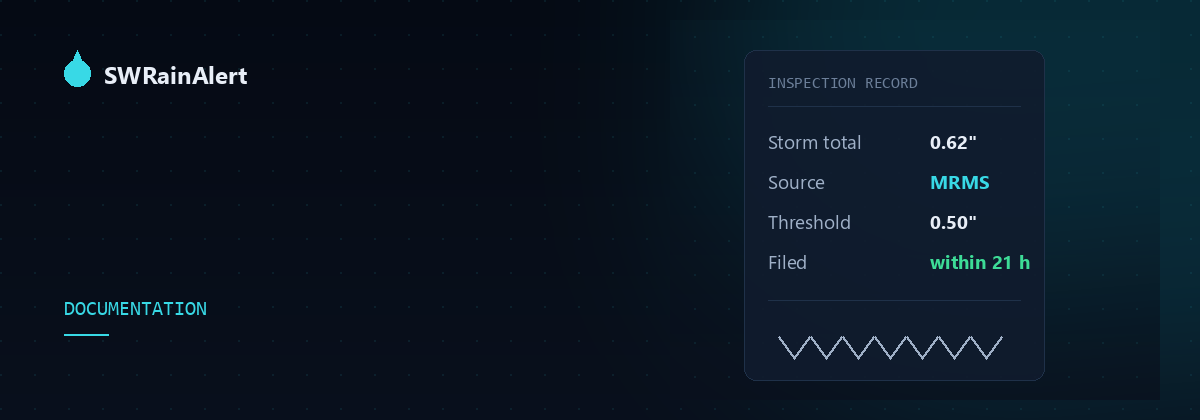
What Makes a Stormwater Inspection Record Defensible
An inspection nobody can evidence is, for enforcement purposes, close to an inspection that never happened. Here is what a record needs to carry.
Permit language
“Qualifying Rain Event”: What Your Permit Actually Means
Two permits can use two different phrases for what looks like the same storm, and require two different things of you.
Data
How NOAA Radar Rainfall Data Works, and Where It Fails
Stage IV is the quality-controlled record that arrives late. MRMS is the near-real-time estimate that arrives first. Compliance monitoring needs both, for different reasons.
Buying guide
12 Questions to Ask Any SWPPP Software Vendor
You are the one who has to defend this system to an auditor. These are the questions worth asking before you sign anything — and the answers that should worry you.
Multi-state programs
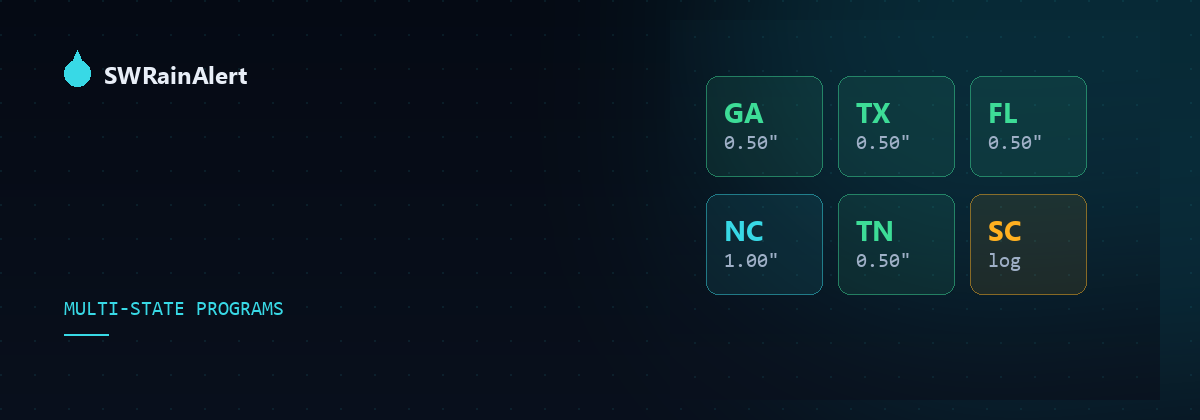
Running Sites in Several States Under Different Permits
Standardising on the strictest state looks safe and is expensive. Standardising on the loosest is cheap until an inspector arrives. Neither is the answer.
Field practice
The Post-Storm Stormwater Inspection Checklist
The inspection itself is the easy part. The two places these go wrong are before you leave the truck and after you get back to it.
Stop finding out about the storm on Monday.
Two independent NOAA sources over every site on your permit, with the inspection deadline already counted in the site’s own local time. Thirty days free, no card.